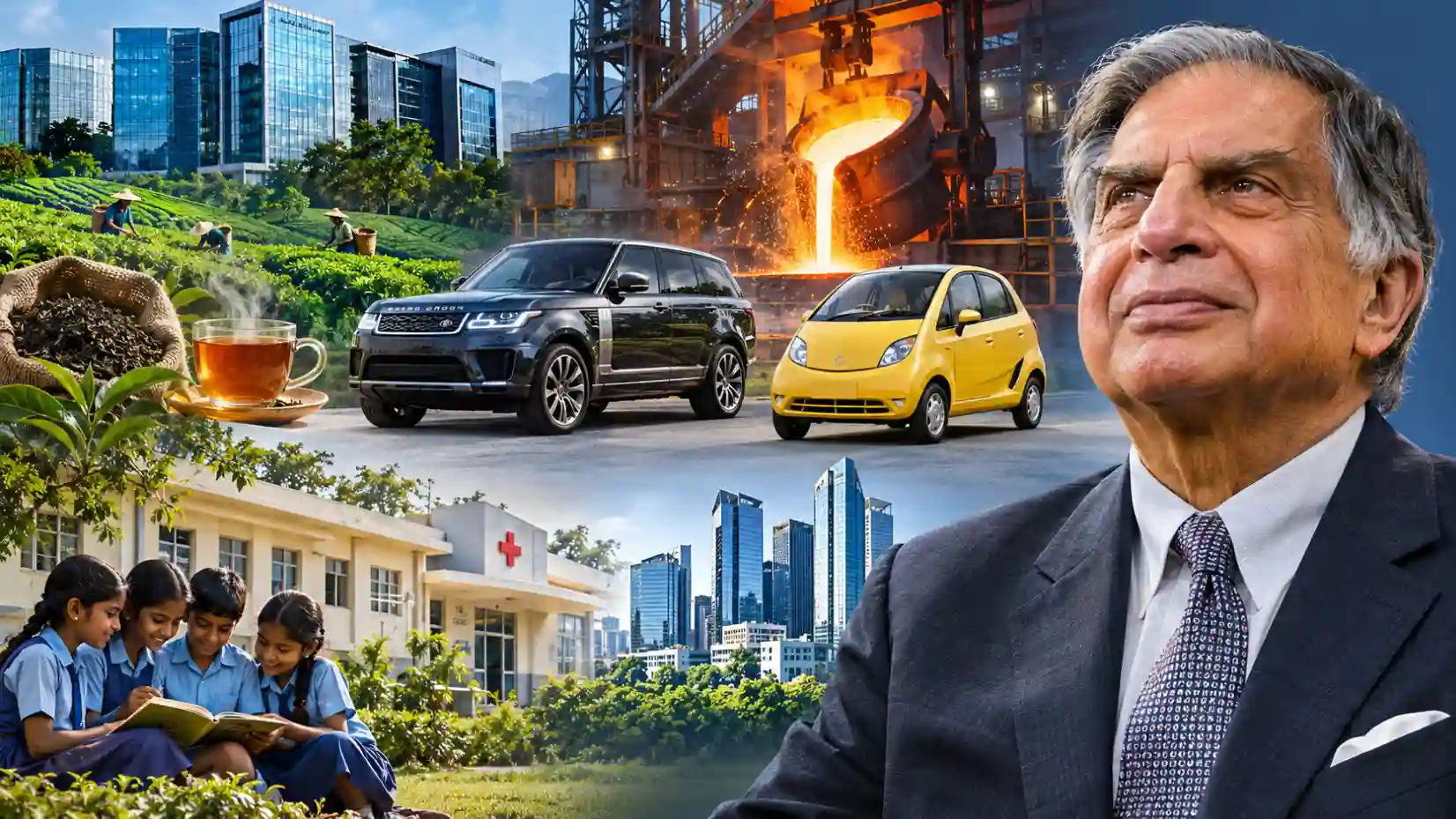
Ratan Tata’s business legacy is the Tata Group he reshaped between 1991 and 2012. Revenue rose from about $4 billion to over $100 billion, the group bought Tetley, Corus and Jaguar Land Rover, and charitable trusts hold about 66% of Tata Sons, the holding company. He died on October 9, 2024, aged 86.
This guide covers what he built, what went wrong, where the money goes and what founders can still copy.
Ratan Tata at a Glance
| Detail | Fact |
| Born | December 28, 1937, Mumbai |
| Chairman of Tata Sons | 1991 to 2012 (interim chairman October 2016 to February 2017) |
| Group revenue | About $4 billion in 1991, over $100 billion by 2012 |
| Biggest overseas deals | Tetley (2000), Corus (2007), Jaguar Land Rover (2008) |
| Ownership of Tata Sons | Tata Trusts and allied trusts hold about 66% |
| Died | October 9, 2024, Mumbai, aged 86 |
Who Was Ratan Tata?
Ratan Naval Tata was born in Mumbai on December 28, 1937. Jamsetji Tata founded the group in 1868, and Ratan belonged to the family that grew it. He joined the group in 1962 and spent close to three decades inside it before taking over from JRD Tata in 1991.
That long apprenticeship matters. He knew the operating companies from the inside before he tried to change them.
What Did Ratan Tata Do for the Tata Group?
When he became chairman of Tata Sons in March 1991, the group worked more like a loose federation than one company. JRD Tata’s personal pull held much of it together. India was also opening its economy that same year, which meant foreign competitors were about to arrive.
Ratan Tata tightened coordination under Tata Sons, professionalised management and pointed the group overseas. By the time he stepped down on his 75th birthday, December 28, 2012, revenue had crossed $100 billion, and more than half of it came from outside India.
Ratan Tata’s Companies and Acquisitions
Most of the global push came through four group companies: Tata Tea, Tata Motors, Tata Steel and, later, their overseas arms. Reported prices vary a little between sources, so treat the figures as approximate.
| Year | Deal | Group company | Approx. value |
| 2000 | Tetley (UK tea) | Tata Tea | About $431 million |
| 2004 | Daewoo Commercial Vehicle (South Korea) | Tata Motors | Not covered here |
| 2006 | Eight O’Clock Coffee (US) | Tata Tea | Not covered here |
| 2007 | Corus (UK and Netherlands steel) | Tata Steel | About $12 billion |
| 2008 | Jaguar and Land Rover (UK) | Tata Motors | $2.3 billion, all cash |
Tetley came first. In 2000 it was the largest overseas acquisition by any Indian company, and it made Tata a name in British kitchens.
Jaguar Land Rover was the bolder bet. Tata Motors bought both brands from Ford in 2008, with the global financial crisis already under way. They lost money for several years under Tata ownership, then became Tata Motors’ largest profit contributor.
Corus tells a different story. Tata Steel won it in 2007 after a bidding contest with Brazil’s CSN, and the deal made Tata Steel one of the world’s largest steelmakers. It also left the group with heavy debt. Critics have called it an expensive mistake; supporters say the scale was worth the pain. Both views have evidence behind them.
Tata Indica and Tata Nano: Two Bets on the Indian Buyer
The Tata Indica arrived in 1998, marketed as India’s first indigenous passenger car. Open magazine reports it lost about ₹500 crore for Tata Motors in fiscal 2000, which upset shareholders.
The Nano went further. Tata set a target price of about ₹1 lakh for a car an ordinary family could afford. It was unveiled in 2008 and launched in March 2009. Early safety concerns and weak marketing hurt sales, and Tata Motors stopped making it in 2019, a decade after launch.
The Nano failed as a product. It still forced engineers to rethink every component around a price ceiling, and that discipline is the part founders can borrow.
Ratan Tata’s Philanthropy and the Tata Trusts
The most unusual fact about the Tata Group is who owns it. The Sir Dorabji Tata Trust, the Sir Ratan Tata Trust and allied trusts hold about 66% of Tata Sons. Dividends from the holding company flow largely to those trusts, which fund education, healthcare, rural development, nutrition and animal welfare. Ratan Tata headed the main trusts for years.
His own giving followed the same line:
- COVID-19 relief: reports put the group’s pledge at ₹500 crore in 2020.
- Harvard Business School: Tata companies and charities gave $50 million in 2010 for an executive centre, now called Tata Hall.
- Personal life: he never married and was known for a quiet, modest lifestyle.
After his death, Noel Tata was appointed chairman of Tata Trusts.
Ratan Tata as a Startup Investor
After he stepped back in 2012, Ratan Tata became one of India’s best-known angel investors. Entrepreneur India reports he backed more than 30 startups, some in a personal capacity and some through RNT Capital Advisors. The list includes Paytm, Ola Electric, Lenskart, CarDekho, Snapdeal and Cure.fit.
The cheques were often small. Early reports put his first Paytm investment at ₹1 crore and Ola Cabs at about ₹95 lakh. The value came from the name on the cap table and from his advice.
Want to see how many of those bets grew into big companies? Check our list of the top unicorn startups in India in 2026.
What Can Entrepreneurs Learn From Ratan Tata?
Entrepreneurs can learn five things from Ratan Tata: think in decades, buy brands that already work, accept failure in public, build ownership around a purpose, and back the next generation of founders. His record also shows that bold bets cost money long before they pay.
1. Plan in Decades, Not Quarters
Tetley in 2000 and Jaguar Land Rover in 2008 were not quick wins. JLR lost money first and became a profit engine later. Few founders will buy a luxury carmaker, but the same test applies to a senior hire or a second city: judge it in year five, not month six.
2. Buy Something That Already Works
Tetley and Jaguar Land Rover were respected names before Tata touched them. Tata bought the reputation along with the factories. If you acquire a small competitor, pay for the customers and the brand first.
3. Take the Loss in Public
The Indica lost money, and the Nano was discontinued. Tata kept going on other bets. The habit worth copying is not the risk-taking. It is the willingness to let a failure be visible and still make the next call.
4. Build Ownership Around a Purpose
Because trusts hold about two-thirds of Tata Sons, profit and public good sit in the same structure. Most startups choose a legal form for tax and funding reasons, and that is fine. Our guide to Private Limited vs LLP for startups covers that decision.
5. Help the Next Founders
His angel investing after 2012 gave young companies credibility they could not buy. Business Today also credits him with grooming leaders inside the group, including N. Chandrasekaran, who has chaired Tata Sons since 2017. Thinking of starting up? Read how to register a company in India.
Where Ratan Tata’s Record Is Less Clean
Three things complicate the story. The Corus debt weighed on the group for years. The Nano did not sell. And the succession went badly: Cyrus Mistry took over as chairman in 2012 and was removed in 2016, a public dispute that brought Ratan Tata back as interim chairman until Chandrasekaran took over in 2017.
If you run a company, the lesson is plain. Write down who can overrule whom before the disagreement starts.
Ratan Tata Business Legacy: FAQs
What is Ratan Tata best known for?
Ratan Tata is best known for leading the Tata Group as chairman of Tata Sons from 1991 to 2012. He expanded it overseas through deals such as Tetley, Corus and Jaguar Land Rover, launched the Tata Nano, and later invested in Indian startups.
How much did the Tata Group grow under Ratan Tata?
Group revenue grew from about $4 billion in 1991 to more than $100 billion by 2012, according to multiple business reports. More than half of that revenue came from outside India by the time he retired.
Which companies did Ratan Tata acquire?
The main acquisitions were Tetley (2000, Tata Tea), Corus (2007, Tata Steel) and Jaguar Land Rover (2008, Tata Motors). The group also bought Daewoo Commercial Vehicle in 2004 and Eight O’Clock Coffee in 2006.
Who owns Tata Sons?
Philanthropic trusts, mainly the Sir Dorabji Tata Trust and the Sir Ratan Tata Trust, hold about 66% of Tata Sons. The Tata family itself holds a much smaller stake, which is why the group is often described as structurally philanthropic.
Which startups did Ratan Tata invest in?
He backed more than 30 startups, including Paytm, Ola Electric, Lenskart, CarDekho, Snapdeal and Cure.fit. Some investments were personal and some went through his firm, RNT Capital Advisors.
When did Ratan Tata die?
Ratan Tata died on October 9, 2024, in Mumbai at the age of 86. He had stepped back from day-to-day control of the Tata Group in 2012, and Natarajan Chandrasekaran has chaired Tata Sons since 2017.
What do you feel about this post?

Like

Love

Happy

Haha

Sad