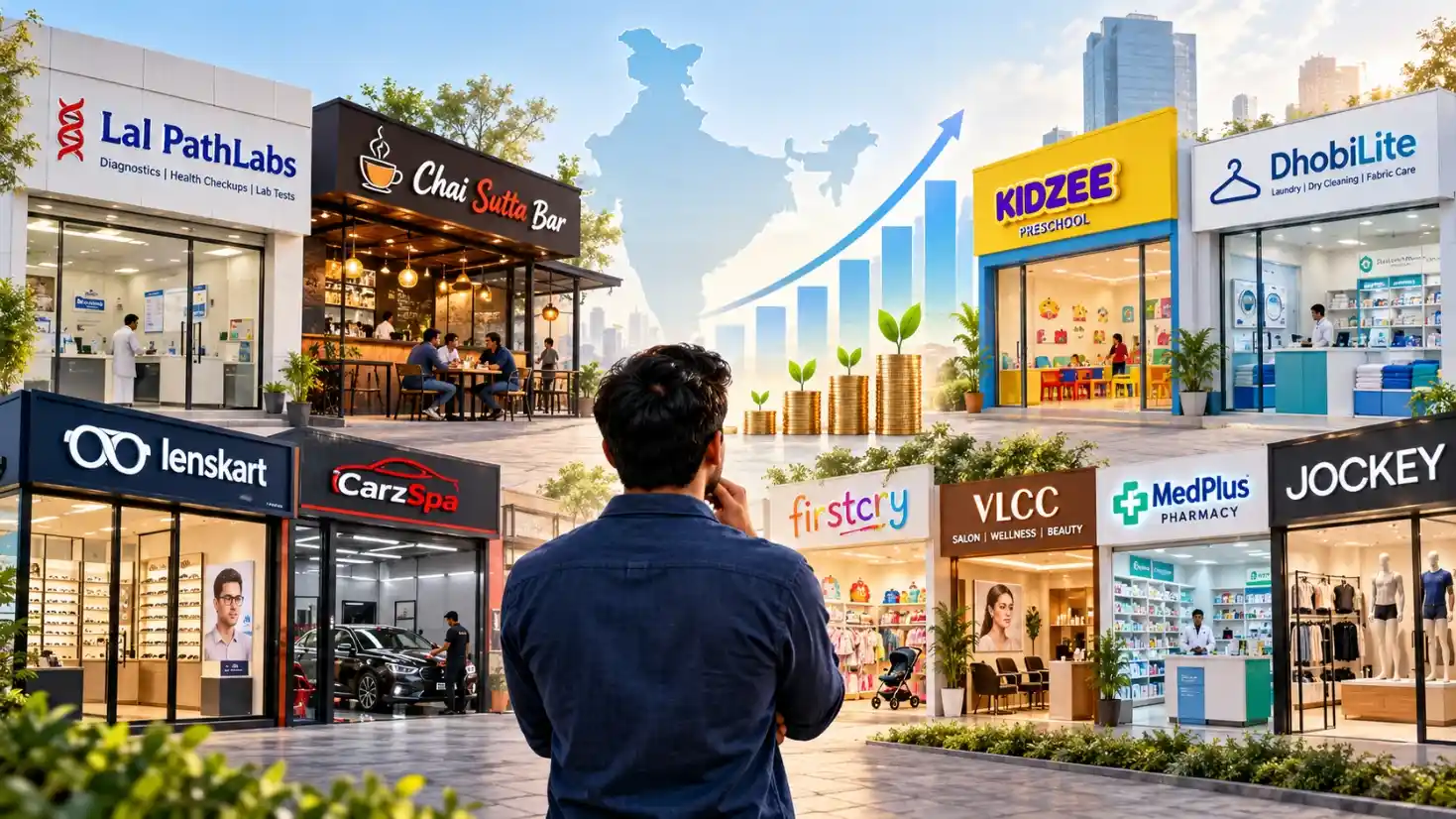
The most profitable franchise businesses in India in 2026 are the ones with low capital, repeat customers and a brand people already trust. Strong picks include Lal PathLabs, Chai Sutta Bar, Kidzee, laundry chains, Lenskart, CarzSpa, FirstCry, VLCC, MedPlus and Jockey, with most investments running from ₹3 lakh to ₹50 lakh.
Most lists rank brands by size. This one asks a different question: how fast can a normal outlet recover your money, and will customers keep coming once the launch buzz fades?
One warning before the list. The investment figures below are indicative ranges from public franchise listings in 2026. Brands revise them often, and some listings come from the brands themselves. Use each number as a starting point for your own enquiry. No franchise can promise returns, and this is general information, not financial advice.
Quick Comparison: 10 Profitable Franchises in India
| # | Franchise | Sector | Indicative investment | Best for |
| 1 | Lal PathLabs | Diagnostics | ₹3–8 lakh | Small budgets |
| 2 | Chai Sutta Bar | Tea café | ₹22–30 lakh | Food first-timers |
| 3 | Kidzee | Preschool | ₹12–20 lakh | Education-minded owners |
| 4 | Laundry chains (e.g., DhobiLite) | Garment care | From about ₹7 lakh | Service businesses with no stock |
| 5 | Lenskart | Eyewear retail | ₹30–40 lakh | Retail with repeat buyers |
| 6 | CarzSpa | Car detailing | ₹40–45 lakh | Car-loving metro owners |
| 7 | FirstCry | Kids’ retail | ₹25–30 lakh | Family-focused neighbourhoods |
| 8 | VLCC | Salon and wellness | ₹35–45 lakh | Service-led retail |
| 9 | MedPlus | Pharmacy | Confirm with brand | Licensed pharmacists |
| 10 | Jockey | Apparel retail | ₹45–50 lakh | Larger budgets, steady sales |
What Makes a Franchise Profitable in India?
A profitable franchise is one where the money you put in comes back quickly and the customers keep returning. Four things decide that more than brand fame does:
- Capital needed: A lower starting cost means a shorter wait to break even.
- Repeat demand: Tea, tests, haircuts and medicines get bought again and again. A wedding necklace does not.
- Stock risk: Service businesses carry no unsold inventory. Retail does.
- Brand pull and support: A known name brings footfall on day one. Training and supply support keep it going.
How Big Is Franchising in India?
India is the second-largest franchise market in the world, with about 4,600 active franchisors running nearly 2 lakh outlets. Roughly 35% of franchise concepts are food and beverage brands, and 40% of franchisees start with an initial investment of ₹5–10 lakh. More than 300 companies begin franchising every year, and the sector accounts for close to 2% of national GDP.
Those numbers come from the FranCast whitepaper on 2023-24 forecasts, reported by IndiaRetailing. They are a few years old, but they are still the figures most often quoted for the Indian market.
The 10 Profitable Franchise Businesses in India
1. Lal PathLabs (Diagnostics)
Indicative investment: ₹3–8 lakh
This is the cheapest way into the list. Dr Lal PathLabs is a national diagnostics chain, and people need blood tests whether the economy is up or down. Many tests also repeat, because anyone managing diabetes or thyroid checks goes back every few months.
The low end of the range usually buys a smaller collection-style setup, so ask exactly what the figure covers. Income depends on test volume and on local doctor referrals, which take time to build.
2. Chai Sutta Bar (Tea Café)
Indicative investment: ₹22–30 lakh
Tea is a daily habit, and a cup costs very little to make. That gap is why tea cafés can look healthy on paper. Chai Sutta Bar started in Indore and built its footfall around young crowds and late evenings.
The catch is how crowded the category has become. Rent and location decide most outcomes, and you need an FSSAI licence before you open.
3. Kidzee (Preschool)
Indicative investment: ₹12–20 lakh
Kidzee is the preschool brand of Zee Learn. A preschool holds no stock, collects fees by term, and refills its classes every year as a new batch of toddlers arrives.
The first year is the hard part. Enrolment builds slowly, and good teachers are hard to hire and keep. Parents also check safety closely, so budget for proper premises.
4. Laundry and Dry-Cleaning Chains
Indicative investment: from about ₹7 lakh
India’s organised laundry market is about ₹20,000 crore, and only around 5% of it is served by branded operators. That gap is the opportunity. Chains such as DhobiLite sell a unit model where customers return weekly and you carry no unsold stock.
Setups with a processing facility can cost up to ₹2 crore as a master franchise, and demand is seasonal in most of India. A small outlet is far cheaper than that, but machines, delivery staff and peak-month cash flow all need planning.
5. Lenskart (Eyewear)
Indicative investment: ₹30–40 lakh
People need glasses, and they replace them. Lenskart has more than 2,000 stores across India and heavy digital marketing behind it, so a new store starts with footfall already built.
Eyewear stock is costly to hold, and you will need staff who can run eye tests. Check whether the brand is offering franchise slots in your city before you plan anything.
6. CarzSpa (Car Detailing)
Indicative investment: ₹40–45 lakh
More cars on Indian roads means more people paying to keep them clean. CarzSpa lists over 150 studios nationwide. That figure comes from the brand’s own page, so treat it as a claim to verify.
Skilled technicians make or break a detailing studio. So does upselling, since a basic wash earns little. Ask current franchisees how much of their revenue comes from premium services.
7. FirstCry (Kids’ Products)
Indicative investment: ₹25–30 lakh
Parents buy for children constantly, and the shopping list changes every few months as the child grows. FirstCry is a familiar name in this space.
Sizes age out, which makes unsold stock a real risk. Online discounts also squeeze store prices, so ask what the brand does to protect franchise stores from its own web sales.
8. VLCC (Salon and Wellness)
Indicative investment: ₹35–45 lakh
Salon and wellness customers book again every few weeks. VLCC brings a trusted name to a business where trust is half the sale.
Trained therapists are the hard part, and they tend to leave for better offers. Fixed costs are high, so an outlet with thin bookings feels it quickly.
9. MedPlus (Pharmacy)
Indicative investment: confirm with the brand
I could not verify a current investment figure for MedPlus, so check it directly with the company. Medicines are a need-based purchase, which keeps demand steady in good and bad years.
A pharmacy needs a drug licence and a registered pharmacist. Margins per sale are thin, and online pharmacies compete on price. Volume and good stock control matter more here than anywhere else on this list.
10. Jockey (Exclusive Outlet)
Indicative investment: ₹45–50 lakh
Innerwear is something nobody skips, and Jockey has a long reputation for quality and stable sales. That makes it a calm, predictable business.
It is also the most expensive entry here, and the money goes into prime retail space and stock. Returns tend to come slowly. This one suits an owner with a larger budget who wants low drama.
Which Franchise Suits Your Budget?
| Budget | Options from this list |
| Under ₹10 lakh | Lal PathLabs, small laundry outlet |
| ₹10–30 lakh | Kidzee, Chai Sutta Bar, FirstCry |
| ₹30–50 lakh | Lenskart, VLCC, CarzSpa, Jockey |
Remember that the franchise fee is only part of the bill. Interiors, deposits, stock and working capital come on top. Plan for several months of expenses before the first rupee of profit.
How to Check a Franchise Before You Pay
India has no single franchise law, so your protection is mostly the contract you sign. Do these five things first:
- Ask for a written breakdown of the total cost: franchise fee, interiors, deposit, stock and working capital.
- Speak to at least three current franchisees. Include one the brand did not hand-pick for you.
- Read the clauses on royalty, territory and lock-in period line by line.
- Build your own break-even sheet using your city’s rent and salaries, not the brand’s sample numbers.
- Confirm the licences you will need, such as FSSAI for food, a drug licence for pharmacy, and GST registration.
FAQs About Profitable Franchise Businesses in India
What is the most profitable franchise in India?
No single franchise wins for everyone. Profit depends on your city, location and investment. Low-cost, repeat-demand models such as diagnostics, tea cafés, preschools and laundry tend to recover capital fastest. Larger retail formats like Jockey and Lenskart cost more and usually return money more slowly.
How much money do I need to start a franchise in India?
Costs range from about ₹3 lakh for small diagnostic setups to ₹50 lakh or more for large retail outlets. Per the FranCast whitepaper, about 40% of franchisees began with ₹5–10 lakh. Always add working capital on top of the stated franchise fee.
Which franchise has the lowest investment in India?
Among the brands listed here, Lal PathLabs has the lowest indicative range at ₹3–8 lakh, followed by small laundry outlets from about ₹7 lakh and Kidzee preschools at ₹12–20 lakh. Confirm what each figure includes, because scope varies by format.
Are franchises really more profitable than starting your own business?
A franchise gives you a known name, training and a tested system, which cuts early mistakes. It also adds fees and rules. Profit is never guaranteed, and a weak location can sink a strong brand. Compare the royalty against what brand support is actually worth.
How long does a franchise take to break even?
It varies by sector and location. Some brands quote 12 to 24 months for well-run outlets, but those are projections. Ask current franchisees how long they actually took, and test the brand’s claim against your own rent and staffing costs.
Which franchise sector is best for small towns?
Everyday-need sectors do well outside the metros: tea cafés, pharmacies, diagnostics and preschools. Luxury or premium formats usually need big-city footfall. Check whether the brand has outlets in towns of similar size before you commit.
The Bottom Line
Pick the sector first and the brand second. Decide how much repeat business your town can realistically give you, then match it to a model you can afford to run for a year without profit.
A famous name alone will not save a weak outlet. Our piece on Indian celebrity startups that failed shows how often that goes wrong. And if you want to see how well-known names choose where to put their money, read how cricketers who own restaurants, gyms or sports franchises built their side businesses.
What do you feel about this post?

Like

Love

Happy

Haha

Sad